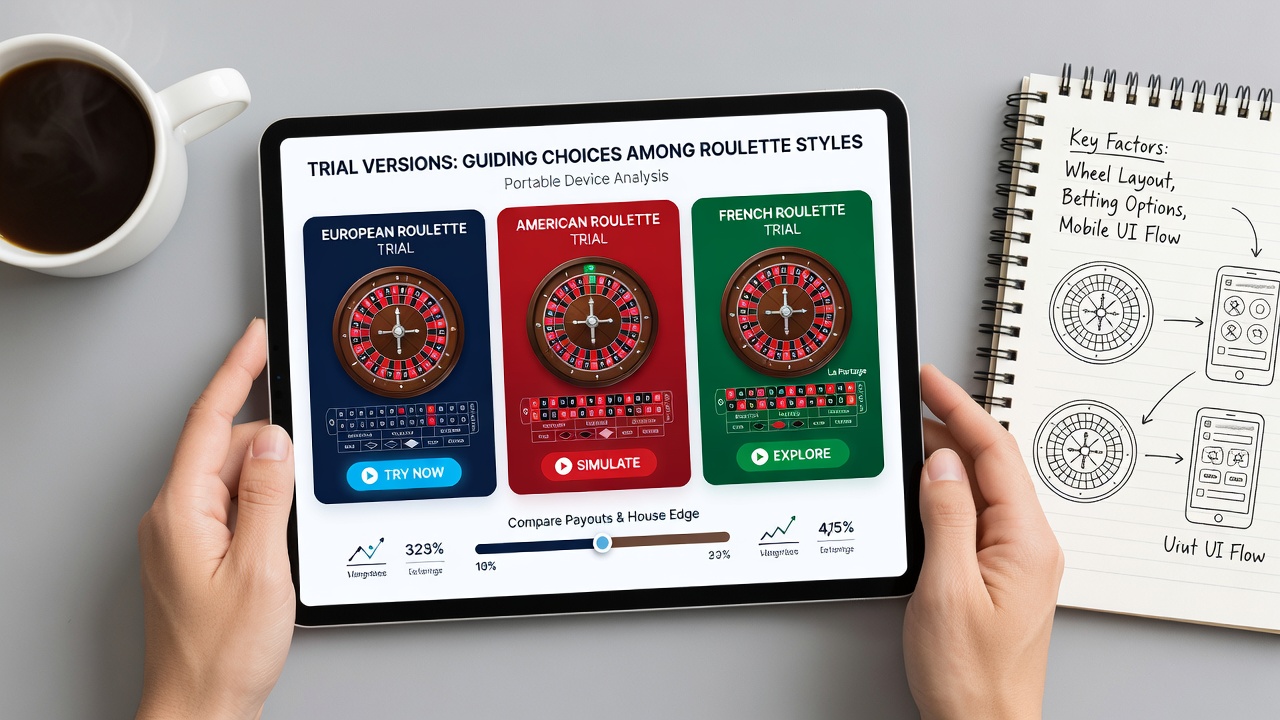
The Role of Trial Versions in Guiding Roulette Choices on Portable Devices
Portable devices have transformed how players encounter roulette variants, and trial versions play a central part in that process. European, American, and French wheel formats each carry distinct rules and probabilities, yet many users first meet these differences through free demo modes on smartphones and tablets. Data from industry reports indicate that trial access allows individuals to test wheel configurations without financial commitment, which in turn shapes later decisions about which style to pursue in real play.
Mechanics of Demo Modes Across Mobile Platforms
Demo versions replicate the full interface of live and random number generator roulette titles, including betting layouts, wheel animations, and payout structures. Users can switch between single-zero wheels and double-zero arrangements within the same application, observing how house edges affect outcomes over extended sessions. Research from the University of Nevada, Las Vegas gaming studies shows that repeated exposure to these mechanics helps players recognize patterns such as the frequency of certain number clusters on different wheel types.
Application stores list hundreds of roulette titles that include trial options, and download statistics reveal higher engagement rates for apps offering multiple variants side by side. Observers note that the ability to toggle between formats without leaving the mobile session encourages direct comparison of visual elements like pocket spacing and ball behavior. Those comparisons often determine whether a player favors the tighter betting options on French-style layouts or the faster pace associated with American wheels.
Data Patterns in Variant Selection After Trial Use
Figures released by gaming analytics firms indicate that players who spend more than fifteen minutes in demo mode are more likely to select European roulette in subsequent paid sessions. The single-zero configuration appears more frequently in final choices once users have tested both wheel types, a trend that holds across several major mobile operating systems. Canadian provincial gaming reports from 2025 documented similar shifts, with trial participants showing measurable preference changes after exposure to payout tables for each variant.

November 2026 is expected to bring updated mobile platform guidelines that require clearer labeling of demo versus real-money sections. Such changes may further standardize how trial periods present wheel differences, potentially increasing the accuracy of player choices based on prior demo experience. Industry organizations tracking these developments report that standardized presentation reduces confusion around rule variations and supports more informed selection of roulette styles.
Interface Elements That Influence Decisions
Mobile demo interfaces often highlight specific features such as call bets on French wheels or the additional double-zero pocket on American versions through on-screen prompts. These visual cues guide attention toward the mechanical distinctions that matter most during actual play. Studies conducted by academic research teams have found that users who interact with highlighted elements during trials retain information about house-edge differences at higher rates than those who skip the prompts.
Touch-screen controls also affect how players experience each style, since swipe gestures for placing bets feel distinct depending on the number of betting options displayed. Applications that allow seamless rotation between wheel types within a single trial session enable direct observation of these control differences. Data indicates that such fluid transitions correlate with longer trial engagement and more deliberate final selections among available variants.
Conclusion
Trial versions on portable devices continue to serve as the primary entry point for exploring roulette formats, and available evidence shows they directly affect which styles players ultimately choose. Wheel configurations, payout structures, and interface designs all become clearer through repeated demo interaction, leading to selections grounded in observed mechanics rather than initial assumptions. As platform standards evolve into late 2026, the structure of these trial experiences may further refine how users navigate among European, American, and French roulette options on mobile screens.